
Quinta da Regaleira Initiation Well: Guide & Symbolism
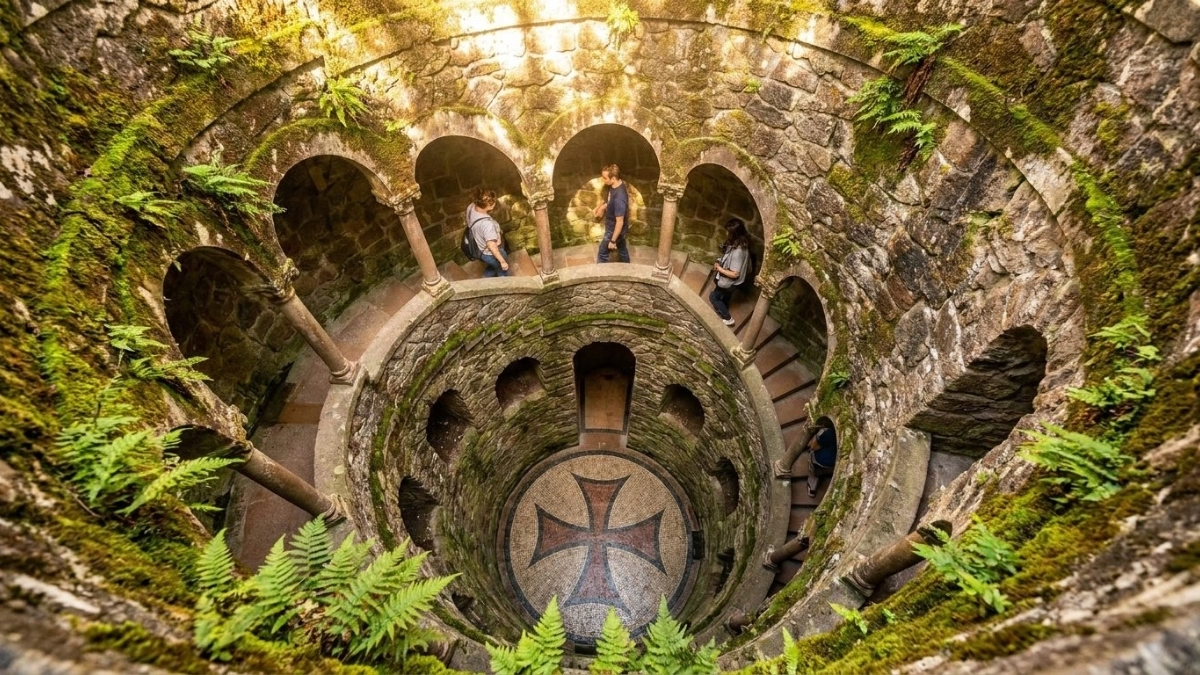
The Initiation Well at Quinta da Regaleira is a roughly 27-meter inverted tower carved into the hillside, ringed by a spiral staircase of about nine landings and marked by a Templar cross inlaid at the base. Built for the ritual symbolism of Freemasonry, it was never a water well. You descend it in one direction only and exit through the underground tunnels.
The Initiation Well (Poço Iniciático) is the single image most people associate with Quinta da Regaleira, and often with Sintra itself: a stone spiral plunging into the earth like a tower turned upside down. It looks ancient and ceremonial, and it was designed to — but it dates from the estate’s construction between 1904 and 1910, not from any medieval order.
This guide explains what the Initiation Well actually is, the Masonic and Templar symbolism woven into it, the meaning of the cross at its base, why you can only walk down it, and how it links into the estate’s tunnel system. For the step-by-step experience of the descent itself, see our companion guide to the Initiation Well spiral staircase.
The Initiation Well at a Glance
| Detail | The Initiation Well |
|---|---|
| Portuguese name | Poço Iniciático |
| Depth | around 27 meters |
| Landings | about nine |
| At the base | inlaid Templar/Rosicrucian cross |
| Direction of travel | descend only (one-directional) |
| Purpose | symbolic/ritual, never a water source |
| Exit | via the underground tunnels |
What the Initiation Well Actually Is
The Initiation Well is a ceremonial shaft, not a water well. It descends about 27 meters into the hillside and is wrapped by a spiral staircase of roughly nine landings. It was built between 1904 and 1910 as part of Quinta da Regaleira, commissioned by António Augusto Carvalho Monteiro and designed by the Italian architect Luigi Manini to stage a symbolic journey underground.
Despite the name, the Initiation Well never held water or served any practical function. It is best understood as an inverted tower: instead of rising toward the sky, it burrows down through the rock, its spiral staircase circling a central void. The effect is deliberately disorienting — you lose the horizon and measure your progress only by the landings and the changing light.
The well was the vision of Carvalho Monteiro, a wealthy Portuguese collector nicknamed “Monteiro dos Milhões” (Monteiro of the Millions), working with Manini, an opera set designer as much as an architect. Together they filled the whole Neo-Manueline palace and gardens with layered meaning, and the well is the centerpiece of that program — a piece of built theater designed to be walked through rather than merely looked at.
Masonic, Templar and Rosicrucian Symbolism
The Initiation Well encodes the symbolism of Freemasonry, the Knights Templar and the Rosicrucians. The descent through its landings is read as a ritual passage — a symbolic death and rebirth, or a journey through the underworld before returning to the light. The nine landings are often linked to the nine circles of Dante’s Inferno and to stages of Masonic initiation.
The well’s name is a direct clue: an “initiation well” evokes a rite of passage. In Masonic tradition, initiation involves a symbolic descent into darkness followed by a return to the light, and the architecture stages exactly that. You spiral downward into the earth, reach the lowest point, and then walk out horizontally through a tunnel toward daylight — death and resurrection rendered in stone.
The number of landings matters too. The roughly nine levels are frequently connected to the nine circles of Dante’s Inferno, and also to the tiers of initiation in esoteric fraternities. Carvalho Monteiro’s interests spanned Freemasonry, the mythology of the Knights Templar and Rosicrucian thought, and the well braids all three into one structure. None of it is labeled on site, which is why an audio guide or a live guide adds so much here; our overview of the estate’s symbolism and secret history traces the wider scheme.
The Templar Cross at the Base
At the very bottom of the well, set into the floor, is a compass-like star with a cross at its center — usually read as a Knights Templar cross layered with Rosicrucian meaning, echoing the emblem of the Order of Christ, the Portuguese successor to the Templars. It marks the endpoint of the symbolic descent and the pivot between going down and moving outward into the tunnels.
Standing on or beside the cross is the moment the well’s story resolves: you have reached the deepest, darkest point, and the only way on is toward the light. The eight-pointed motif around it reinforces the theme of orientation and passage. It is also the most photographed spot at the base, so expect company there at busy times.
Why You Descend Only
The Initiation Well is one-directional: you enter at the top and walk down the spiral staircase, exiting through a tunnel at the bottom rather than climbing back up. This preserves the symbolic one-way journey and keeps foot traffic flowing on the narrow stairs. It also makes the well the estate’s busiest bottleneck, so timing your visit matters.
The descend-only rule is partly symbolic and partly practical. Symbolically, a rite of passage runs one way — you are not meant to retrace your steps back into the light the way you came. Practically, the staircase is narrow, and letting people move in both directions would jam it instantly. So everyone flows the same way: down the spiral, across the base, and out through the underground tunnels.
The consequence for your visit is real. Because the well only takes people in one direction and everyone wants to see it, a queue forms at the top entrance and grows through the morning as day-trippers arrive from Lisbon. The fix is simple: get to the estate at the 10:00 AM opening and go to the well first. Our guide to the best time to visit covers the quietest windows in detail, and a skip-the-line ticket secures an early timed slot.
How the Well Connects to the Tunnels
The Initiation Well is not a dead end — it is the dramatic entrance to a network of underground grottoes and passages. From the base, you leave through a dim tunnel that eventually surfaces elsewhere in the gardens, most memorably at the stepping stones of the Cascade Lake, so the well and the tunnels function as a single continuous route.
That connection is a big part of why the well feels so theatrical: the descent builds tension in the dark, and the tunnel releases it, delivering you unexpectedly into daylight and greenery. The estate also holds a smaller, contrasting shaft, the Unfinished Well, which is linked into the same subterranean system but built to a very different design.
Why It’s the Estate’s Icon
The Initiation Well has become the emblem of Quinta da Regaleira because it delivers everything the estate is about in one place: bold Romantic architecture, dense esoteric symbolism, and a genuinely immersive experience you move through rather than observe. Photographs of the spiral, shot looking straight down the central void, are among the most recognizable images of Sintra.
It rewards a little preparation. Knowing that you descend only, that the cross waits at the bottom, and that the tunnels carry you onward turns a striking staircase into a legible story — the reason so many visitors call the well the highlight of the whole estate.
Frequently Asked Questions
What is the Initiation Well at Quinta da Regaleira?
It is a roughly 27-meter ceremonial shaft ringed by a spiral staircase of about nine landings, built between 1904 and 1910 as part of the Regaleira estate. Despite the name it never held water; it was designed as a symbolic space for a ritual descent, drawing on Masonic, Templar and Rosicrucian imagery, with a Templar-style cross set into the floor at its base.
Why is it called an initiation well?
The name refers to rites of initiation. In Masonic and esoteric tradition, initiation involves a symbolic descent into darkness followed by a return to the light, and the well stages exactly that journey. You spiral down into the earth, reach the cross at the base, then walk out through a tunnel toward daylight — a passage often read as symbolic death and rebirth.
How deep is the Initiation Well?
It is about 27 meters deep, roughly the height of a nine-story building, with approximately nine landings spiraling around a central open shaft. The exact figures are frequently rounded in guides, but 27 meters and nine levels are the commonly cited numbers. It feels deeper than it measures because the spiral and the loss of the horizon distort your sense of distance.
What does the cross at the bottom mean?
Set into the floor at the base is a star-and-cross motif usually read as a Knights Templar cross with Rosicrucian associations, echoing the emblem of the Portuguese Order of Christ. It marks the deepest point of the symbolic descent and the turning point where the journey shifts from going down to moving outward into the tunnels toward the light.
Can you climb up the Initiation Well?
No. The well is one-directional — you descend the spiral staircase and exit through a tunnel at the bottom rather than walking back up. This keeps with the symbolic one-way journey and stops the narrow stairs from jamming with two-way traffic. Because everyone moves the same direction, a queue can build at the top entrance during busy periods.
Is the Initiation Well included in the ticket?
Yes. General admission to Quinta da Regaleira covers the entire estate, including the Initiation Well, the Unfinished Well and the connecting tunnels — there is no separate ticket for the well. To avoid the longest queues, book an early timed slot; a skip-the-line ticket reserves your entry in advance.
When is the Initiation Well least crowded?
Right at the 10:00 AM opening. The well is the estate’s busiest bottleneck because it only admits people in one direction, and its queue grows through the morning as tour groups arrive from Lisbon. Reaching the estate at opening and heading straight to the well is the single most effective way to see it without a long wait.
Where does the Initiation Well lead?
From the base you exit through a tunnel, not back up the stairs. The tunnel is part of the estate’s underground network of grottoes and passages, and it eventually surfaces elsewhere in the gardens — one route emerges dramatically at the stepping stones across the Cascade Lake. The well and the tunnels are best experienced as a single continuous journey.
Is the Initiation Well suitable for everyone?
The setting is remarkable but demanding. The spiral staircase is narrow, can be wet and slippery, and there is no lift or step-free route through it, so it is not suitable for wheelchairs and can be difficult for anyone with limited mobility or a fear of heights. Wear sturdy, non-slip shoes and take the steps slowly.
