
The Regaleira Tower: Views, Climb & Architecture 2026
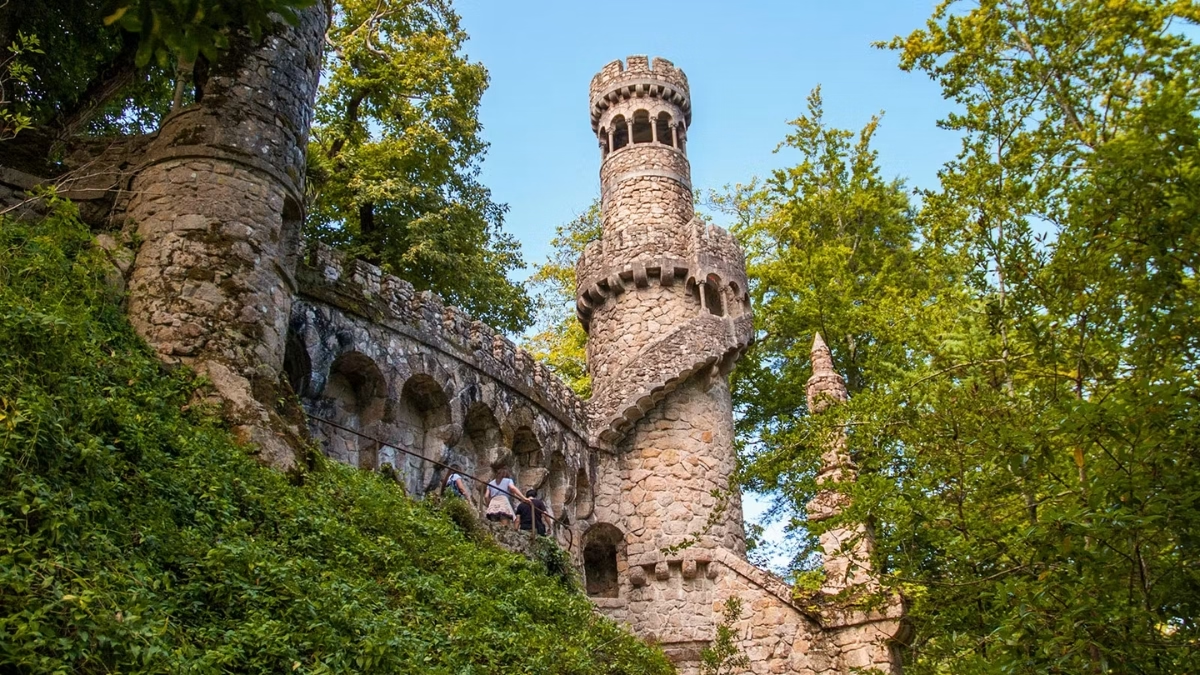
The Regaleira Tower is a slender Neo-Manueline turret in the upper gardens of Quinta da Regaleira that you can climb by a tight internal staircase. From the top you get one of the best views on the estate, looking across the wooded grounds toward the Palácio da Regaleira, the Sintra hills and, on clear days, the Moorish Castle ridge. It’s a quick stop, but a rewarding one.
Most visitors come to Quinta da Regaleira for the Initiation Well and the tunnels, and the tower is easy to walk past on the climb through the gardens. That’s a shame, because it’s one of the few points on the estate where you get to look down on the whole composition — the palace, the terraces and the tree canopy — rather than up at it.
This guide covers what the tower is, what climbing it is actually like, the views you get from the top, and where it fits into the wider design of the estate.
What Is the Regaleira Tower?
The Regaleira Tower is a tall, narrow stone turret set in the upper part of the estate, built between 1904 and 1910 as part of Luigi Manini’s Neo-Manueline design for Carvalho Monteiro. It functions partly as a lookout and partly as a decorative folly, tying the gardens’ skyline to the pinnacles and finials of the main palace. You can climb it for a raised view over the grounds.
The tower is one of several built structures that punctuate the gardens, alongside the Palácio, the chapel and the various grottoes. Designed by the Italian architect Luigi Manini and completed around 1910, it belongs to the same Romantic, Neo-Manueline vocabulary as the rest of the estate: pale stone, carved detailing, and a deliberately antique, storybook silhouette. Where the palace and its architecture anchor the lower terraces, the tower gives the upper gardens a vertical accent you can see from several paths below.
Unlike the grand Regaleira palace, the tower is compact and functional. It reads as a lookout folly — a structure whose main purpose is to let you climb and survey the estate that Carvalho Monteiro built.
Climbing the Tower
You climb the Regaleira Tower by a narrow internal spiral staircase to a small viewing platform near the top. It’s a short climb, but the steps are tight and can be worn, and the platform holds only a few people at a time, so you may wait briefly at busy periods. Wear sturdy shoes and take the same care you would on the estate’s other stairs.
The climb itself is quick — this is not the long descent of the Initiation Well — but the staircase is narrow and winds tightly, so it can bottleneck when two groups meet. The viewing space at the top is small, which keeps the tower quieter than the estate’s headline sights, but also means you shouldn’t expect to linger for long if others are waiting behind you.
As with the Initiation Well, the stone underfoot can be uneven and slick after rain, so treat the tower as one more reason to wear proper shoes. If steep, enclosed stairs are difficult for you, the good news is that the tower is optional — the gardens around it are worth reaching either way, and much of the best scenery is at ground level.
The Views from the Top
The reward for the climb is a genuinely different perspective. From the platform you look out over the tree canopy of the estate, down toward the pinnacled roofline of the Palácio da Regaleira, and across the folds of the Serra de Sintra. On a clear day the sightlines stretch toward the ridge crowned by the Moorish Castle and, depending on the season and the foliage, glimpses of the wider Sintra landscape that gives the whole UNESCO Cultural Landscape its drama.
It’s also one of the best places to understand the estate as a designed whole. From ground level, Regaleira reveals itself piece by piece — a grotto here, a well there. From the tower you can read how the gardens, grottoes and lakes were layered up the hillside, and how the built follies were placed to be seen from one another. Bring a camera; the light is best in the morning, before the midday haze settles over the valley.
Where the Tower Fits in Your Visit
The tower sits in the upper reaches of the estate, so it works naturally as part of a loop that climbs away from the palace and comes back down through the gardens. Because a full visit runs to two or three hours across steep, uneven terrain, it pays to plan a route rather than backtrack; our guide on how long to spend helps you pace it.
Timing matters too. The estate opens at 10:00 AM, and the first hour is the quietest across every sight, the tower included. If you arrive at opening you can climb the tower and reach the Initiation Well before the day-trip crowds build; for the full picture on timing, see our guide to the best time to visit. A skip-the-line ticket locks in an early slot so you’re not queuing at the gate first.
Frequently Asked Questions
Can you climb the Regaleira Tower?
Yes. The tower has an internal staircase leading to a small viewing platform near the top, and it’s open to visitors as part of general admission. The climb is short but the stairs are narrow and can be worn, and the platform holds only a few people at a time. Take the same care you would on the estate’s other stairs, and wear sturdy shoes.
What can you see from the top of the tower?
You get a raised view over the estate’s tree canopy toward the pinnacled roofline of the Palácio da Regaleira, and out across the Serra de Sintra. On clear days the view reaches toward the ridge of the Moorish Castle and the wider Sintra landscape. It’s one of the best vantage points on the estate for understanding how the gardens were built up the hillside.
Is the tower included in the ticket?
Yes. General admission to Quinta da Regaleira covers the whole estate, including the tower, the palace, the chapel, both wells, the tunnels and the gardens. There’s no separate charge to climb the tower. The main thing that shapes your visit is the timed-entry slot, not access to individual sights, so book an early slot to enjoy them with fewer crowds.
How tall is the Regaleira Tower?
The tower is a slender multi-story turret in the Neo-Manueline style, tall enough to rise above the surrounding tree canopy and give a clear view over the estate, though it’s modest next to the main palace. Its exact height isn’t the point — what matters is that it climbs above the gardens to offer a lookout, which is the role its designer, Luigi Manini, gave it.
Who designed the tower?
The tower was designed by the Italian architect and set designer Luigi Manini, who created the whole estate for António Augusto Carvalho Monteiro between 1904 and 1910. It shares the Romantic, Neo-Manueline vocabulary of the palace and chapel — carved stone, antique detailing and a deliberately storybook silhouette. Manini’s theatrical background shows in how the built follies are placed to be seen from one another across the gardens.
Is the tower worth visiting?
For most people, yes — it’s a quick climb for one of the best views on the estate, and it’s usually quieter than the headline sights. If steep, enclosed stairs are difficult for you, it’s entirely optional and you can enjoy the gardens without it. Either way, it helps you appreciate Regaleira as a designed landscape rather than a series of separate attractions.
Is the tower suitable for people with limited mobility?
Not easily. The tower is reached by climbing through steep, uneven upper gardens, and the ascent inside is by a tight staircase, so it’s difficult for anyone with mobility limitations or a fear of enclosed spaces. Much of the estate involves similar terrain. If stairs are a concern, focus on the more level garden paths and skip the tower and the Initiation Well.
When is the tower least crowded?
Right at the 10:00 AM opening, along with the rest of the estate. The first hour is the quietest, and because the tower’s platform is small, arriving early means you won’t queue for the climb or share the view with a crowd. Late afternoon is also calmer than the midday peak, though you’ll have less time before the gardens close.
Where is the tower on the estate?
The tower stands in the upper part of the gardens, above the terraces around the palace. It fits naturally into a walking loop that climbs away from the Palácio and returns downhill through the grottoes and lakes. Because the terrain is steep, plan a route rather than doubling back — our guide on how long to spend and the estate map both help you sequence your visit.
