
Quinta da Regaleira Underground Tunnels: Visitor Guide
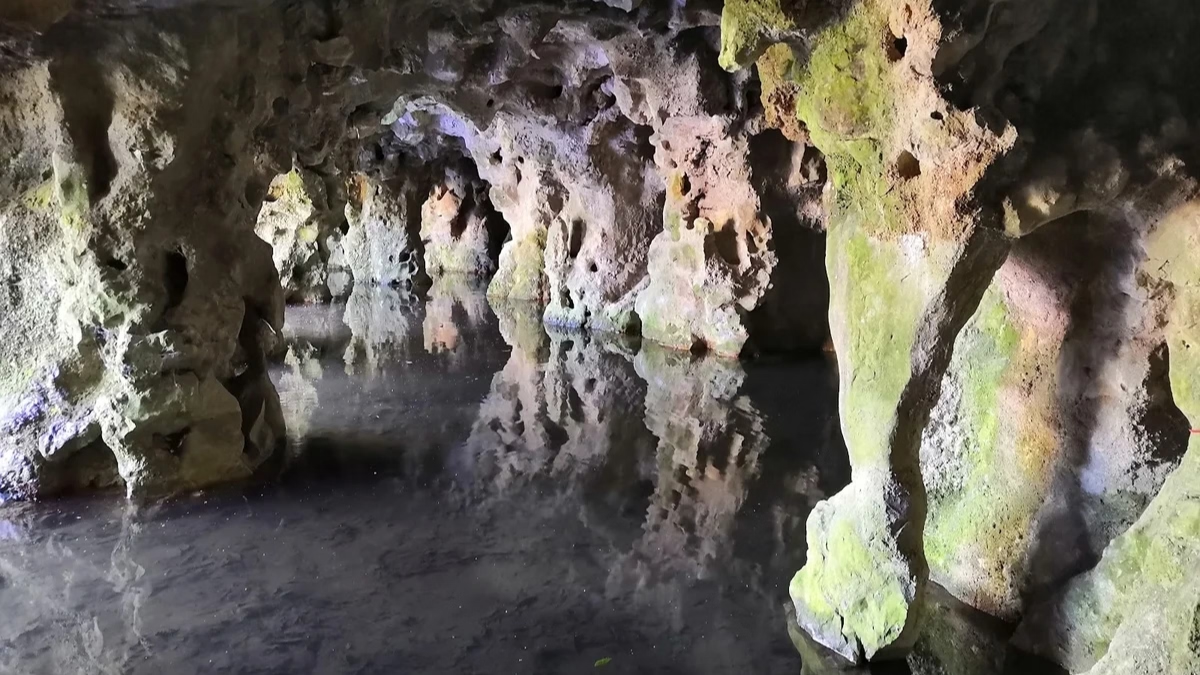
The underground tunnels at Quinta da Regaleira are a network of rock-lined passages and grottoes that connect the two wells, the Cascade lake and the gardens. You enter them at the base of the Initiation Well and emerge at different points across the estate, so the route is part of the experience — a deliberate “journey through darkness” designed to disorient and then reward you with a burst of daylight. The footing is dim and uneven, so tread carefully.
Most visitors come to Quinta da Regaleira for the spiral Initiation Well, but the well is really a doorway. At its base, a low opening leads into a system of tunnels that burrow beneath the gardens, linking the estate’s most atmospheric features into a single underground circuit. There are no signs down here and more than one exit, which is exactly the point.
This guide explains what the tunnels are, where each passage leads, how to navigate them without missing anything, and what the footing and lighting are really like.
The Tunnel Network at a Glance
| Detail | The Underground Tunnels |
|---|---|
| What it is | Rock-lined tunnels and grottoes linking the estate’s features |
| Main entrance | The base of the Initiation Well |
| Connects to | The Unfinished Well, the Cascade lake, the gardens and grottoes |
| Exits | Several, at different points across the estate |
| Lighting | Dim, with occasional daylight openings |
| Footing | Uneven, rocky and sometimes damp |
What the Underground Tunnels Are
The tunnels were built between 1904 and 1910 as part of Luigi Manini’s design for the estate, not as service passages but as an experience in their own right. They are lined with rough, deliberately cave-like rock — closer to constructed grottoes than to plain corridors — and they weave beneath the hillside gardens on several levels. The effect is theatrical: you leave the ordered world of paths and lawns above and drop into something that feels ancient and unmapped.
Because the estate is steeped in Masonic, Templar and alchemical symbolism, the tunnels are usually read as the “underworld” stage of a symbolic journey. You descend the Initiation Well — which you can only walk down, never up — and the tunnels are the passage you must travel through in the dark before you re-emerge into the light. Our guide to the estate’s symbolism and secret history unpacks what that journey is meant to represent.
Where the Tunnels Lead
From the base of the Initiation Well, the tunnels branch toward three main destinations: the smaller Unfinished Well, the Cascade lake with its stepping stones, and openings back into the gardens near the grottoes. Each exit delivers you to a different part of the estate, so which way you turn changes what you see next. There is no single “correct” route — the network is designed for wandering.
The most rewarding passage leads to the Cascade lake, where the tunnel opens behind a small waterfall and you cross to the far bank on stepping stones set just above the waterline. Another route connects to the Unfinished Well, a second, shallower shaft with straight staircases that you view rather than climb. A third set of openings returns you to the grottoes and garden paths above. Because the exits are scattered, plenty of visitors surface, realize they missed a branch, and go back for another loop.
The Journey Through Darkness
The symbolic weight of the tunnels is easy to feel even if you know nothing about the estate’s history. Manini and his patron, António Augusto Carvalho Monteiro, built the descent so that light and dark alternate: a stretch of near-total darkness, then a shaft of daylight from an opening overhead, then darkness again. It mirrors the initiatory idea of passing through the underworld and being reborn into the light, a motif that runs through Freemasonry and the older mystery traditions the estate draws on.
You don’t need a guide to appreciate the atmosphere, but the meaning is not signposted anywhere in the tunnels themselves. An audio guide or a live commentary fills in the layers you’d otherwise walk straight past. If you’d like the symbolism explained as you go, a guided tour turns the tunnels from a scenic shortcut into the centerpiece of the visit.
Navigating the Tunnels
To see the whole network, descend the Initiation Well first, then explore each tunnel branch in turn rather than heading straight for the nearest exit. Use your phone’s torch for the darkest stretches, and expect to double back. Allow 20–30 minutes if you want to walk every passage, and go early, because the single-file descent into the well creates the estate’s worst bottleneck.
The tunnels only run one way in practice: you enter from the bottom of the Initiation Well, which is a one-directional, single-file descent. That makes the well the estate’s main choke point, and the queue there builds steadily through the morning. Arriving at the 10:00 AM opening and going straight to the well is the single best move — you’ll have the tunnels close to yourself and won’t be shuffling through the dark behind a crowd. A skip-the-line ticket locks in an early timed slot so you can be among the first down.
Once you’re below, take your time and try each branch. The lighting is deliberately low and there are no handrails in most sections, so a phone torch helps on the darkest steps. The rock underfoot is uneven and can be slick after rain, which is common in Sintra’s damp microclimate.
Footing, Lighting & Accessibility
The tunnels are the least accessible part of an estate that is already steep and demanding. Passages are narrow, ceilings are low in places, and the floor is rough natural-look stone that stays damp in the grottoes near the water. There is no lighting bright enough to read a map by, and the surfaces can be genuinely slippery, so sturdy, grippy shoes matter more here than anywhere else on the estate.
Anyone with limited mobility, a fear of enclosed spaces, or a pushchair should plan to skip the underground sections and enjoy the gardens above ground instead — the gardens, grottoes and lakes can be reached without going below. There is no step-free route through the tunnels, and because the well descent is one-way, you cannot simply turn back once you’ve committed.
Frequently Asked Questions
What are the underground tunnels at Quinta da Regaleira?
They are a network of rock-lined tunnels and constructed grottoes built between 1904 and 1910 as part of the estate’s Romantic design. They run beneath the gardens on several levels and connect the two wells, the Cascade lake and the garden paths. Rather than being service passages, they were made to be walked as a deliberate, atmospheric “journey through darkness” toward the light.
How do I get into the tunnels?
You enter at the base of the Initiation Well, after descending its spiral staircase. The well is one-directional — you can only walk down it — and the tunnel opening at the bottom is the way through. From there the passages branch toward different exits across the estate, so once you’re below, you follow the tunnels rather than climbing back up the well.
Where do the tunnels come out?
There are several exits. One leads to the Cascade lake, where you emerge near a small waterfall and cross the water on stepping stones. Another connects to the Unfinished Well, and others open back into the grottoes and garden paths. Because the exits are spread out, it’s easy to surface, realize you missed a branch, and loop back for another pass.
Are the tunnels safe to walk through?
Yes, for most visitors, but they demand care. The lighting is intentionally dim, the ceilings are low in places, and the rock underfoot is uneven and often damp. There are few handrails. Wear sturdy shoes with good grip, use your phone torch on the darkest stretches, and slow down — most slips happen because people rush.
Can I skip the tunnels if I’m claustrophobic?
Yes. The tunnels are optional, and you can see the gardens, grottoes and lakes and most of the estate without going underground. If enclosed or dark spaces bother you, admire the top of the Initiation Well from the surface and stay on the garden paths. Just remember the well is a one-way descent, so don’t start down it expecting to turn around.
How long does it take to explore the tunnels?
If you want to walk every branch, allow 20 to 30 minutes underground, plus the time to descend the well. Many visitors move through faster, but doubling back to catch missed passages adds time. Factor this into the two to three hours a full estate visit typically takes, and remember the tunnels are busiest late morning.
Are the tunnels wheelchair accessible?
No. There is no step-free route through the tunnels, the passages are narrow and uneven, and the well descent is one-directional single-file. Visitors using wheelchairs or pushchairs, or anyone with limited mobility, should plan to explore the gardens above ground instead. The estate as a whole is steep and uneven, so it’s worth reviewing the terrain before you visit.
Do I need a guide to understand the tunnels?
Not to enjoy them, but the symbolism is not explained anywhere underground. The alternating dark and light stretches represent an initiatory journey through the underworld, a theme drawn from Freemasonry and older mystery traditions. An audio guide or a guided tour explains what you’re walking through as you go.
When are the tunnels least crowded?
Right at the 10:00 AM opening. The single-file descent into the Initiation Well is the estate’s worst bottleneck, and the queue there grows through the morning, which means the tunnels get busy behind it. Arriving early and heading straight for the well lets you walk the passages in relative quiet before the day-trip crowds arrive from Lisbon.
