
Regaleira Gardens, Grottoes & Lakes — Sintra Guide 2026
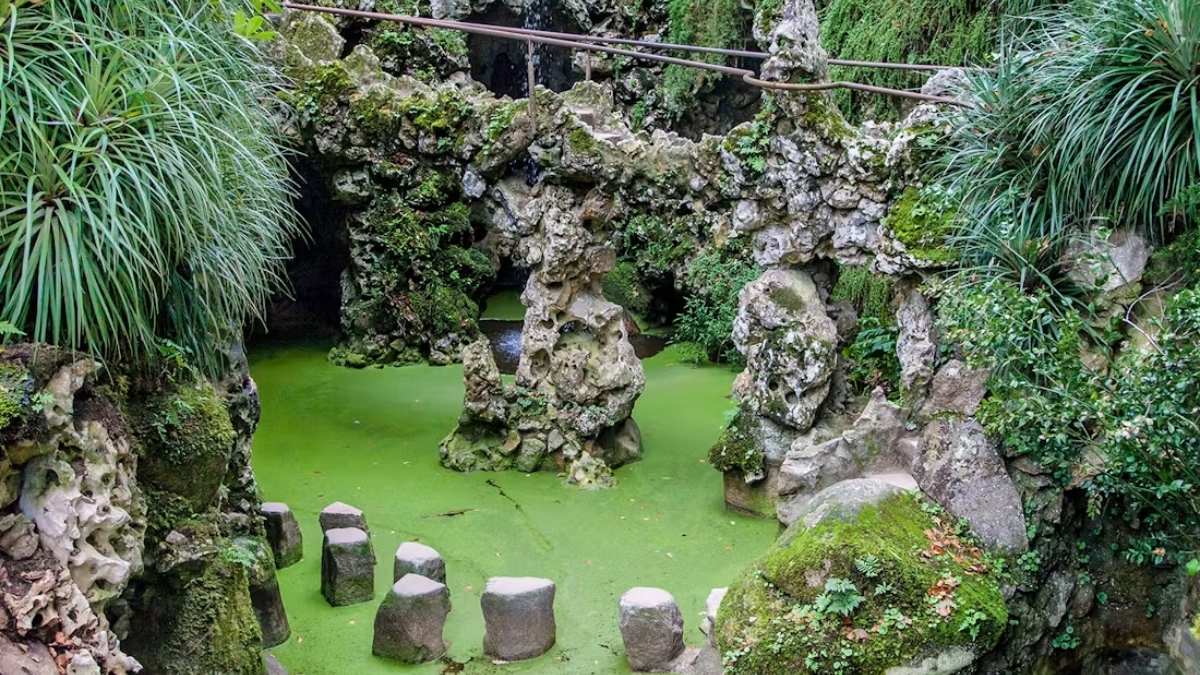
Quinta da Regaleira’s gardens cover about 4 hectares of steep, terraced hillside in Sintra, designed as a Romantic landscape of winding paths, hidden grottoes, small lakes and elevated viewpoints. Laid out between 1904 and 1910 for Carvalho Monteiro, the grounds link the palace, the wells and the tunnels into one connected route. Allow 2–3 hours, and expect cobbles, steps and uneven footing throughout.
Most people come to Quinta da Regaleira for the Initiation Well, but the estate is really a garden first — a densely planted, four-hectare Romantic landscape where paths double back on themselves, tunnels surface at unexpected points, and every rise reveals another folly or viewpoint. Understanding the layout before you go turns a confusing scramble into a satisfying loop.
This guide covers how the gardens are organized across the hillside, how the grottoes, lakes and paths connect, the planting and viewpoints worth pausing for, and a couple of suggested routes so you see the estate in a sensible order.
The Gardens at a Glance
| Detail | Quinta da Regaleira Gardens |
|---|---|
| Size | About 4 hectares |
| Style | Romantic, terraced hillside landscape |
| Created | 1904–1910, for Carvalho Monteiro |
| Terrain | Steep, cobbled, many steps; not fully accessible |
| Time to explore | 2–3 hours for the full estate |
| Key features | Grottoes, lakes, wells, palace, chapel, tower, viewpoints |
How the Gardens Are Laid Out
The gardens rise from the entrance and palace at the lower level up a steep hillside in a series of terraces linked by winding paths and stairways. Italian architect Luigi Manini designed them as a Romantic landscape, deliberately disorienting, so that grottoes, lakes and monuments appear gradually rather than on a single axis. There is no straight route to the top; the paths curl, split and reconnect.
The estate reads as a journey rather than a formal French-style garden. From the entrance near the Neo-Manueline palace, the ground climbs sharply, and Manini used that slope to hide and reveal features in sequence. Lower paths run past lakes and the chapel; middle levels hold the wells and the mouths of the tunnels; the upper reaches open onto viewpoints and the tower. Because the design is intentionally maze-like, you rarely see where a path leads until you take it, which is part of the estate’s charm and its confusion.
The Grottoes and Tunnels
Regaleira’s grottoes are artificial rock caves built into the hillside, several of which conceal the entrances to an underground tunnel network. The tunnels connect the Initiation Well to the lakes and to the Unfinished Well, so you often enter the gardens’ rock features at one point and emerge somewhere quite different. Footing inside is dark, damp and uneven.
The grottoes are one of the estate’s defining tricks. What looks like a shadowy recess in the rockwork is frequently a doorway into a passage, and the network ties the estate’s underground and above-ground worlds together. Descend the Initiation Well and you exit through a tunnel that delivers you into the gardens near the lakes — the single most memorable transition on the estate. For the caves themselves, see our guide to the grottoes, and for the passages behind them, our guide to the underground tunnels explains where each one leads.
The Lakes and Waterways
The lower gardens hold several small ornamental lakes fed by the estate’s water system, the best known being the Cascade Lake, where a low waterfall spills beside a hidden grotto and a line of stepping stones lets you cross the water. These pools are shallow and decorative rather than grand, but they anchor the quietest, greenest corner of the grounds and reward a slow pause. If crossing the water and photographing the waterfall is a priority, plan around it — our guide to the Cascade Lake and its stepping stones covers the timing and the route in detail.
Planting and Viewpoints
The planting mixes native Sintra species with exotics gathered in the estate’s heyday — camellias, ferns, tree ferns, palms and dense evergreens that keep the lower paths shaded and cool even in summer. As you climb, the canopy thins and the views open. The high terraces near the Regaleira Tower look back across the estate and out toward the Serra de Sintra, and on a clear day you can pick out the Moorish Castle on the opposite ridge. These upper viewpoints are the natural turning point of a visit: you climb through the shaded, secretive lower gardens and are rewarded with light and distance at the top.
Suggested Routes
With limited time, head uphill first to the Initiation Well before queues build, descend it into the tunnels, and let the passages carry you down toward the lakes and chapel, finishing at the palace near the exit. With more time, do the reverse of that at a slower pace, saving the well for a mid-morning gap. Either way, tackle the climb early while you’re fresh.
The estate’s one-directional Initiation Well shapes every sensible route, because you can only descend it. The efficient loop is to climb to the Initiation Well soon after opening, walk down its spiral, and follow the tunnels back down through the grottoes to the lakes, then finish at the chapel and palace on your way to the exit. That way gravity works with you and you hit the busiest bottleneck before the crowds. If you’d rather explore independently, a pre-booked skip-the-line ticket secures an early slot, or if you’d prefer someone to lead the way and unpack the symbolism, a guided tour sequences it all for you. Whichever route you choose, wear sturdy shoes: the cobbles are uneven and the tunnel floors can be wet.
Practical Notes for the Gardens
The gardens are the reason the visit takes two to three hours, not the buildings. Paths are steep and frequently stepped, so the estate is tiring and not suitable for wheelchairs or strollers in most sections. Bring water in summer, since the climb is real, and allow extra time if you plan to explore every grotto and dead-end path rather than following a single loop. A pre-booked skip-the-line ticket with the audio guide is the easiest way to lock in an early slot and pick up context on the planting and follies as you go.
Frequently Asked Questions
How big are the gardens at Quinta da Regaleira?
The estate covers about 4 hectares, laid out as a steep terraced hillside rather than a flat park. That compact footprint packs in the palace, chapel, two wells, a tunnel network, several grottoes, small lakes and a tower, which is why a full visit takes two to three hours despite the modest size. The density and the climbing are what make it feel much larger.
What is the layout of the gardens?
The gardens rise from the entrance and palace at the bottom up through a series of terraces connected by winding, deliberately maze-like paths. Lower levels hold the lakes and chapel, the middle holds the wells and tunnel mouths, and the upper terraces open onto viewpoints and the tower. There is no single straight axis; the design reveals features gradually as you climb.
How are the grottoes and tunnels connected?
Several grottoes are built as artificial rock caves that hide entrances to an underground tunnel system. The passages link the Initiation Well to the lakes and to the Unfinished Well, so you often enter at one point and emerge somewhere unexpected. Descending the Initiation Well and exiting through a tunnel into the gardens is the estate’s signature moment.
How long do you need to see the gardens?
Allow two to three hours for the full estate. The terrain is steep and stepped, so you move more slowly than the distances suggest, and the Initiation Well can add a queue at busy times. If you want to explore every side path and grotto rather than following one loop, budget toward the longer end.
Are the gardens accessible for wheelchairs or strollers?
Largely no. The estate is a steep, cobbled hillside with many steps, narrow tunnels and uneven grotto floors, so most of it is not wheelchair or stroller friendly. Some lower paths near the entrance are gentler, but the wells, tunnels and upper viewpoints involve stairs. Wear sturdy, grippy shoes and expect a physical visit.
What is the best route through the gardens?
Climb to the Initiation Well early, descend it, and follow the tunnels down through the grottoes to the lakes, finishing at the chapel and palace near the exit. This uses the one-directional well in your favor and gets you to the busiest spot before the crowds. Reverse it only if you arrive later and can slot the well into a quieter gap.
When are the gardens quietest?
Right at the 10:00 AM opening. The lower paths are shaded and cool first thing, the light is good for photos, and you can reach the Initiation Well before the day-trip crowds arrive from Lisbon. Late afternoon is also calmer than midday but leaves less time before the gardens close.
Do the gardens have good viewpoints?
Yes. The upper terraces near the Regaleira Tower give the best views, looking back across the estate and out toward the Serra de Sintra, with the Moorish Castle visible on a clear day. The lower gardens are more enclosed and green, so the sense of openness is the reward for the climb to the top.
