
Freemasonry & Templar Symbols to Spot at Regaleira
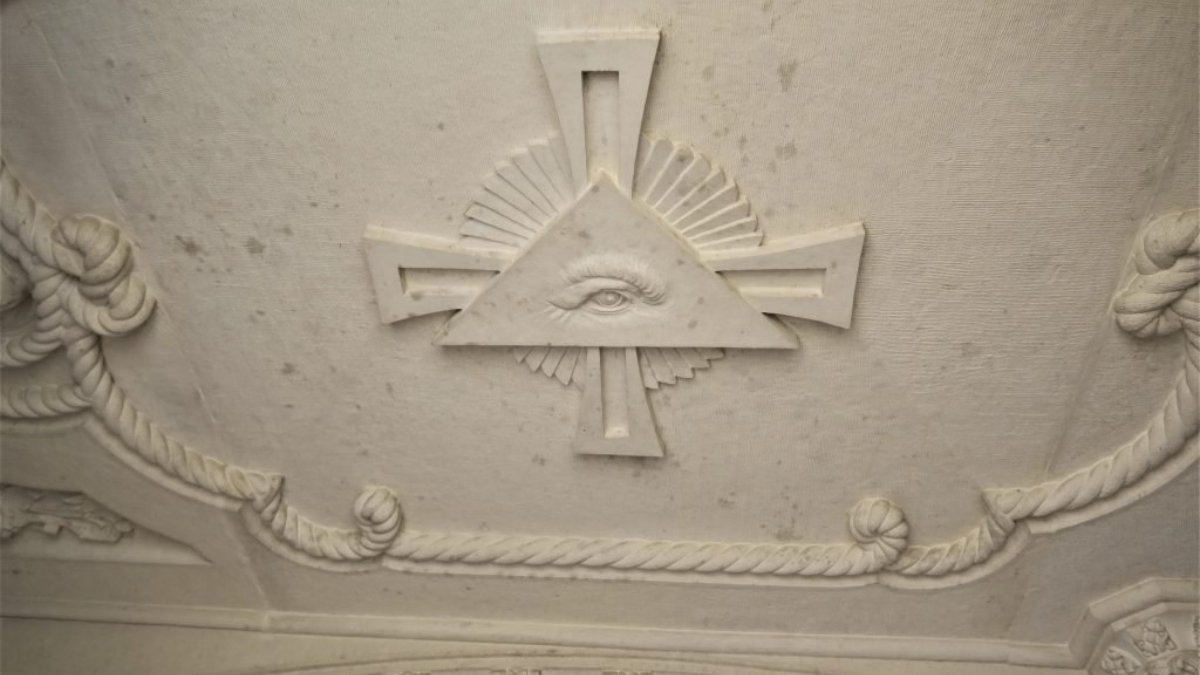
Quinta da Regaleira is packed with esoteric symbols you can spot as you explore: a Templar cross inlaid in the floor at the base of the Initiation Well, the well’s nine landings, the compass-and-square echoes of Freemasonry, and alchemical and Rosicrucian emblems carved into the palace, chapel and garden stonework. This is a spotter’s guide to what to look for and where.
Carvalho Monteiro filled his estate with a deliberate code of symbols drawn from Freemasonry, the Knights Templar, Rosicrucianism and alchemy. Most of it is hidden in plain sight — worked into carvings, floors and thresholds that thousands of visitors walk past without a second look.
This guide is a practical spotter’s list: the concrete motifs to find, and the exact places on the estate to find them. For what it all means as a single story, see our companion guide to the estate’s symbolism and secret history.
The Templar Cross at the Well’s Base
At the bottom of the Initiation Well, set into the floor, is a compass rose or wind rose marked with a cross — widely read as the Cross of the Order of Christ, the Portuguese successor to the Knights Templar. It sits directly beneath the ~27-meter spiral, so you reach it at the end of your descent, before you exit through the tunnels.
The single most photographed symbol on the estate is the mosaic set into the floor at the foot of the Initiation Well. It’s a compass or wind rose bearing a cross often identified with the Order of Christ — the Portuguese order that inherited the property and legacy of the Knights Templar. Carvalho Monteiro was a devoted admirer of that heritage, and placing the cross at the deepest point of the spiral gives it obvious weight.
To find it, walk down the well’s one-directional staircase to the very bottom and look at the floor before you step into the tunnel. Because the well is the estate’s busiest bottleneck, the base can be crowded, so arrive early if you want an unobstructed look. A live guided tour will point the cross out and explain the Order of Christ connection on the spot.
The Nine Levels of the Initiation Well
The Initiation Well descends through about nine landings, and the number is not accidental. Nine recurs across esoteric and initiatory traditions — most famously as the nine circles of Dante’s Inferno, but also in Templar and Masonic numerology. As you spiral down, count the tiers: the structure is built as a descent through nine distinct stages, an architectural detail that turns the walk itself into a symbol.
The well’s inverted-tower form — a tower driven into the ground rather than rising from it — reinforces the idea of a journey inward and downward. It’s the clearest example on the estate of symbolism expressed through architecture rather than carving, and it’s worth pausing on each landing to notice the change as you go. The deeper reading of that descent — as an initiatory journey through nine stages — belongs to the estate’s broader narrative rather than to any single carving.
Masonic Motifs in the Carvings and Floors
Look for Masonic emblems worked into the estate’s stonework and paving: variations on the compass and square, the all-seeing eye, five- and six-pointed stars, and geometric patterns in the mosaics. They appear on thresholds, terrace floors and the ornamental carving of the palace and outbuildings rather than being labeled or displayed.
Freemasonry supplies much of Regaleira’s visual grammar, and once you know the vocabulary you start seeing it everywhere. The compass and square — Freemasonry’s best-known emblem — echoes through the geometric detailing, while pentagrams, hexagrams and star motifs turn up in paving and carved panels. Thresholds and floors are a good place to look, since the act of crossing a symbol underfoot carries its own initiatory meaning.
None of it is signposted, which is part of the design; Carvalho Monteiro wanted the estate to reward those who knew what they were looking at. The audio guide bundled with a skip-the-line ticket helps, because much of this detail is easy to miss. The same star and geometric motifs continue into the gardens and grottoes, where they’re worked into stonework, benches and fountains.
Alchemical and Rosicrucian Emblems
Beyond the Templar and Masonic layer, Regaleira carries an alchemical and Rosicrucian vocabulary. Alchemy speaks in imagery of transformation — sun and moon, the marriage of opposites, the passage from base matter to gold — and echoes of it appear in the estate’s carvings and in the symbolic geography of dark tunnels leading to light-filled gardens. Rosicrucianism, the esoteric current of the rose and the cross, overlaps with the same imagery, and the rose motif appears in the ornamental detail.
You’ll find the densest concentration of this symbolism where the estate is most theatrical: around the underground tunnels that link the wells, where the play of darkness and daylight stages the alchemical idea of transformation as a physical experience. Watch the thresholds where a tunnel opens onto a grotto or lake — those transitions are doing symbolic work as much as the carvings are.
Symbols in the Chapel
The Chapel is the most concentrated single space for spotting symbols, blending Catholic imagery with the esoteric. Look for the Templar and Order of Christ crosses, alongside stars, pentagrams and other motifs worked into the floor, walls and altar detailing. Carvalho Monteiro layered Christian devotion over an esoteric substructure here, so the same space that reads as a private chapel also reads as an initiatory chamber.
Below the chapel, a crypt and passage connect it into the estate’s tunnel system, extending the symbolic program underground. Our guide to the chapel and its tunnel system covers what to look for inside and beneath it. As with the rest of the estate, none of it is captioned — the chapel rewards a slow, deliberate look.
Frequently Asked Questions
What is the Templar cross at the bottom of the Initiation Well?
It’s a compass or wind rose set into the floor at the base of the well, marked with a cross widely identified as the Cross of the Order of Christ — the Portuguese order that succeeded the Knights Templar. You reach it at the end of the one-directional descent, before exiting through the tunnel. It’s the estate’s most famous single symbol, so expect company at busy times.
Why does the Initiation Well have nine levels?
The well descends through about nine landings, and nine is a recurring number in esoteric and initiatory traditions — the nine circles of Dante’s Inferno, and numerological meanings in Templar and Masonic thought. The tiered descent turns the walk itself into a symbol of a journey through stages. Whether Carvalho Monteiro intended a precise reading or a general esoteric resonance is part of the estate’s enduring mystery.
What Masonic symbols can I spot at Regaleira?
Look for variations on the compass and square, the all-seeing eye, and five- and six-pointed stars worked into carvings, thresholds and paving across the palace, chapel and gardens. They aren’t labeled or displayed — they’re woven into the ornamental detail, so you have to know the vocabulary to catch them. An audio guide or a live guide makes a big difference to how much you notice.
Are there alchemical symbols at the estate?
Yes. Alchemical imagery of transformation — sun and moon, opposites in union, the passage from dark to light — appears in the carvings and, more powerfully, in the symbolic geography of the tunnels leading from darkness into the sunlit gardens. Rosicrucian rose-and-cross imagery overlaps with the same themes. The estate stages alchemy as a physical journey as much as a set of emblems.
Is the symbolism officially documented or mostly interpretation?
Some connections are well established — Carvalho Monteiro’s admiration for the Templar legacy and the Order of Christ, and the estate’s clear Masonic and alchemical vocabulary. But many specific readings are interpretation rather than documented fact, because he left no single key explaining his design. Our symbolism and secret history guide separates what’s documented from what’s legend.
Where is the best place to see the symbols?
The Initiation Well (for the Templar cross and the nine levels), the chapel (for the densest mix of Christian and esoteric motifs), and the tunnels and grottoes (for the alchemical play of dark and light) are the three richest areas. Star and geometric motifs also appear in garden paving and carved stonework throughout. Move slowly and look at floors and thresholds, not just walls.
Do I need a guide to find the symbols?
You don’t need one, but it helps enormously, because nothing is captioned. The audio guide included with a skip-the-line ticket points out many motifs, and a live guide can answer questions on the spot. If you’d rather explore alone, read up beforehand so you know the compass, cross, star and rose motifs to watch for.
Was Carvalho Monteiro a Freemason?
He is widely associated with Masonic and esoteric circles, and his estate is saturated with their symbolism, but the documentary record is not conclusive about formal membership. What is clear is his deep interest in the Templars, the Order of Christ, alchemy and initiatory traditions, all of which he encoded into the design. The gap between his evident fascination and the hard evidence is part of Regaleira’s mystique.
